
The Internet of Things (IoT): Revolutionizing Connectivity
The Internet of Things (IoT) has become a pivotal force in reshaping the way we interact with technology and the world around us. At its essence, Internet of Things signifies a network of physical devices, vehicles, appliances, and other objects embedded with sensors, software, and internet connectivity, enabling them to collect and share data. These “smart objects” range from everyday home devices like thermostats to intricate industrial machinery, forming the foundation for what some imagine as entire “smart cities.”
Internet of Things facilitates seamless communication between these smart devices and other internet-connected entities, creating a vast network of interconnected gadgets capable of autonomously exchanging data and performing a multitude of tasks. This functionality extends from monitoring environmental conditions on farms to regulating traffic patterns with smart vehicles, controlling manufacturing processes, and even tracking inventory and shipments in warehouses.
Diverse Applications of IoT
Applications are extensive and varied, with significant impacts across industries such as manufacturing, transportation, healthcare, and agriculture. As the number of internet-connected devices continues to surge, It is playing an increasingly influential role in shaping our world and revolutionizing how we live and work.
- Manufacturing: The Internet of Things underpins Industry 4.0, enabling machines on factory floors to communicate their status to a central system, resulting in predictive maintenance, reduced downtime, and lower maintenance costs.
- Smart Cities: It is instrumental in enhancing city services and conserving resources. Connected streetlights can automatically adjust brightness, reducing energy consumption, and smart waste bins signal garbage trucks when they’re full, optimizing waste collection routes.
- Transportation: In the transportation sector, It enhances traffic management, vehicle safety, and logistics. It allows vehicles to communicate with each other to prevent accidents and provides real-time tracking for shipments.
- Agriculture: Farmers are using the Internet of Things to optimize operations. Soil sensors determine the best times for irrigation, while drones monitor crop health, increasing yields and reducing resource wastage.
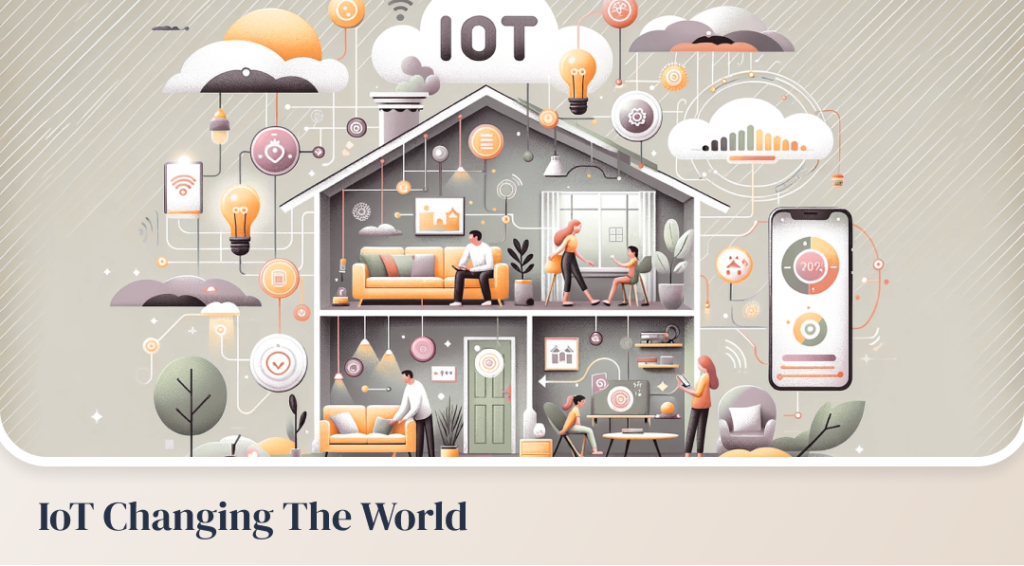
- Smart Homes: The Internet of Things has brought automation and intelligence into homes. Smart thermostats, for example, adapt to user preferences, enhancing convenience and energy efficiency.
Technological Foundations of the Internet of Things
Several technologies unite to make it possible:
- Sensors and Actuators: Sensors detect changes in the environment, such as temperature, humidity, or motion, while actuators enable physical changes, like opening valves or turning motors. They allow machines to interact with the physical world autonomously.
- Connectivity Technologies: Various connectivity methods, including Wi-Fi, Bluetooth, cellular networks, and more, link Internet of Things devices to the Internet.
- Cloud Computing: The cloud stores, processes, and analyzes the enormous amount of data generated by IoT devices, providing the necessary infrastructure for developing and deploying its applications.
- Big Data Analytics: To make sense of the vast data from these devices, advanced analytics tools, including machine learning, data visualization, and predictive analytics, are employed.
- Security and Privacy Technologies: As this technology expands, ensuring security and privacy becomes paramount. Technologies like encryption and intrusion detection systems are vital for protecting IoT devices and data from cyber threats.
Consumer and Enterprise IoT Applications
Internet of Things applications are found across various sectors, including consumer IoT and enterprise IoT, manufacturing, and Industrial Internet of Things (IIoT):
- Consumer IoT: Encompasses applications like smart homes with remote control over appliances and wearables that collect user data for enhanced comfort and efficiency.
- Enterprise IoT: Monitors parameters such as temperature, humidity, energy consumption, and machine performance for optimizing operations and improving business outcomes.
- Healthcare: It allows real-time monitoring of patients and enhances inventory management for pharmaceuticals and medical instruments in hospitals.
- Smart Buildings: Buildings reduce energy costs by using sensors to adjust temperature, lighting, and other systems based on occupancy.
- Agriculture: Smart farming systems use the Internet of Things to monitor environmental conditions and automate irrigation, enhancing crop yields and resource efficiency.
- Smart Cities: It improves traffic management, conserves energy, monitors environmental concerns, and enhances sanitation in urban environments.
In conclusion, the Internet of Things is redefining our world by connecting devices and enhancing their capabilities. Its impact is being felt across industries, from our homes to entire cities, farms to factories. As IoT’s development continues, it will play an increasingly vital role in our future, offering myriad opportunities and challenges that we must navigate with wisdom and foresight.
Stay updated with Axons Lab Blogs for more interesting articles and news


