
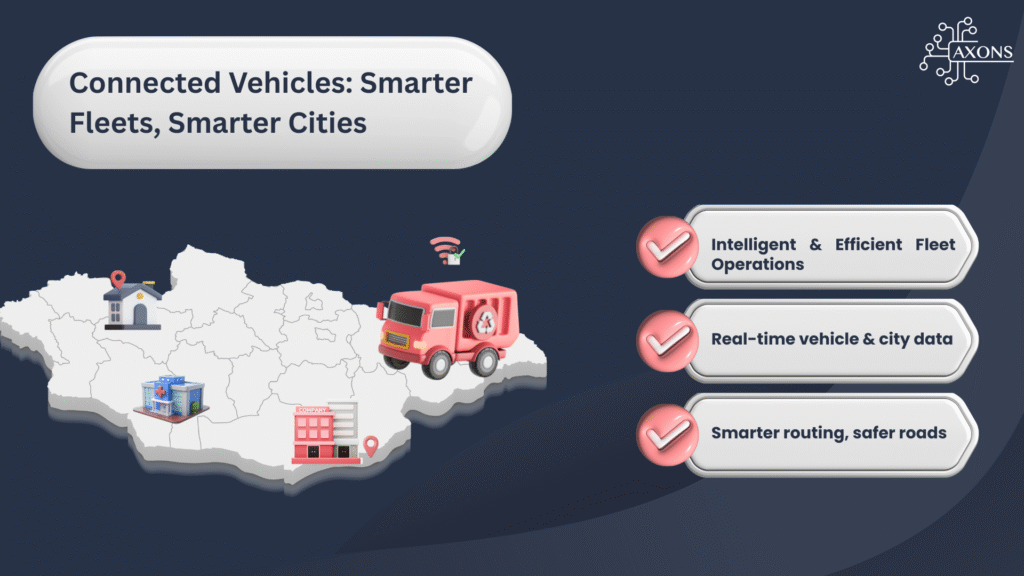
In today’s rapidly evolving digital mobility landscape, connected vehicles are stepping beyond their traditional role as transport assets. They are transforming into powerful, data-driven bridges that link fleets and cities. With every mile traveled and every sensor activation, vehicles are generating a continuous flow of insights. These insights are reshaping the way fleets operate and how cities plan, manage, and optimize their transportation networks. As mobility becomes more intelligent and integrated, connected vehicles are emerging as the foundational layer of tomorrow’s smart transportation ecosystem.
Why Connected Vehicles Matter Today
The growth of connected mobility is not just a trend—it is a structural shift redefining the transportation world. Vehicles equipped with real-time communication modules, telematics devices, and advanced sensors are providing instant visibility into road conditions, driver behavior, traffic density, vehicle health, and environmental impact. This data is becoming essential for both city planners and fleet operators who aim to enhance performance, safety, and sustainability.
For cities, connected vehicle data helps reduce congestion, detect incidents faster, and create smarter mobility policies based on real usage patterns. For fleets, it delivers operational efficiency, ensures safety, and helps companies maintain a strong competitive edge. Because of this dual impact, connected vehicles now serve as a common ground where public needs and private goals align.
How Connected Vehicles Benefit Smart Cities
Smart cities rely heavily on accurate and dynamic data to make informed decisions. Connected vehicles provide exactly that.
Here are some key advantages:
1. Improved Traffic Management
Traffic congestion is a major challenge for urban areas. Real-time vehicle data helps authorities understand movement patterns, identify bottlenecks, and optimize signal timings. This leads to smoother traffic flow and reduced travel times.
2. Enhanced Road Safety
Cities can detect high-risk zones by analyzing braking patterns, harsh maneuvers, or accident reports from connected vehicles. This data allows them to redesign intersections, install proper signage, and implement targeted safety measures.
3. Infrastructure Optimization
Roads, bridges, and public transport systems benefit significantly from predictive maintenance insights. With data showing stress levels, asset usage, and deterioration patterns, cities can prioritize repairs and investments smarter and faster.
4. Environmental Benefits
Connected vehicles support environmental goals by identifying pollution hotspots, monitoring emissions, and promoting eco-friendly routing. Over time, this results in healthier, more sustainable cities.
Why Fleets Rely on Connected Vehicle Technology
For fleet operators, connected vehicles bring unmatched operational advantages:
1. Smarter Routing and Dispatch
With dynamic route optimization, fleets save on time, fuel, and manpower. Real-time traffic alerts ensure drivers always take the most efficient path.
2. Predictive Maintenance
Instead of reacting to breakdowns, fleets can use sensor data to anticipate issues. This reduces downtime, eliminates costly failures, and prolongs vehicle lifespan.
3. Better Driver Performance
Telematics helps monitor driving behavior, improving safety and reducing accidents. Fleets can offer coaching, reward good driving, and lower insurance costs.
4. Data-Driven Decision Making
From operational planning to fuel management, every decision becomes smarter with real-time insights.
Axons Mobility: Turning Data Into Actionable Intelligence
At Axons Mobility, we believe that data is the backbone of the future mobility ecosystem. Our solutions convert raw vehicle data into meaningful intelligence that cities and fleets can use to improve performance, efficiency, and safety. By integrating telematics, real-time analytics, and AI-driven insights, we help organizations make smarter decisions and create more connected mobility experiences.
The Future: Not Just Connected, but Coordinated
The future of mobility will not only be connected—it will be fully coordinated. Vehicles will communicate with each other, with infrastructure, and with city systems to create a seamless flow of information. This coordination will lead to safer roads, efficient fleets, and cities that function in harmony with transportation networks.
Connected vehicles are the bridge between today’s challenges and tomorrow’s intelligent mobility solutions. And with the right technology, the possibilities are limitless.


