
Discover how school transport technology is helping schools overcome driver shortages with telematics, route optimization, safety tools, and predictive maintenance.
Introduction
School districts across the world are now facing one of the biggest transportation challenges of the decade the increasing shortage of qualified school bus drivers. As student populations grow and operational demands rise, transportation departments are struggling to maintain efficiency with fewer drivers available. To manage this crisis, schools are turning toward advanced school transport technology, and solutions like Axons Mobility are redefining what efficient, safe, and reliable student transportation looks like.
This article explains how fleet technologies are closing the driver gap, enhancing safety, reducing operational stress, and preparing schools for the future of smart transportation.
Why the Driver Shortage Is Growing
The driver shortage isn’t a sudden issue. Several long-standing factors have contributed to the problem:
- Aging workforce of school bus drivers
- Low driver retention in traditional transportation systems
- High responsibility but limited incentives
- Increased paperwork and compliance demands
- Outdated routing and fleet management systems
With fewer qualified drivers available, schools need to run smarter not harder. This is where fleet technologies step in as a game changer.
How Smart Fleet Technology Is Filling the Driver Gap
1. Real-Time Telematics for Smarter Decision-Making
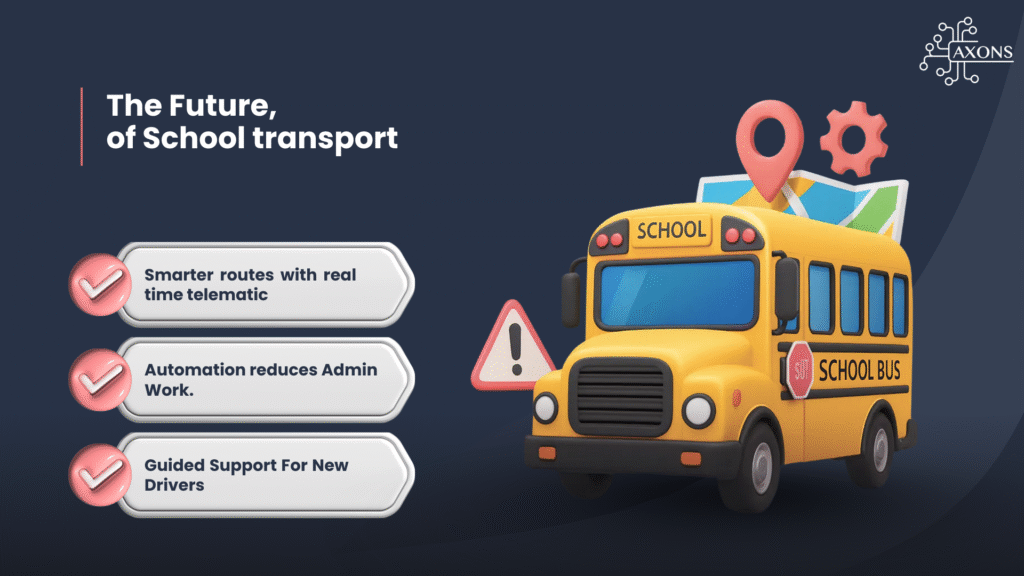
Modern school transport technology gives schools real-time visibility into vehicle movement, fuel usage, unsafe driver behavior, and on-road incidents. With Axons’ real-time telematics, administrators can:
- Track every bus with precision
- Monitor route progress
- Prevent unsafe driving patterns
- Gain immediate alerts for emergencies
This reduces reliance on guesswork and allows transportation teams to make immediate data-driven decisions—even when running short-staffed.
2. Intelligent Route Optimization to Move More Students with Fewer Drivers
One of the most powerful ways to reduce driver dependency is through route optimization. Axons Mobility uses intelligent algorithms to:
- Redesign routes for maximum efficiency
- Reduce unnecessary miles
- Combine or shorten routes when driver availability drops
- Improve on-time performance
Schools can transport more students using fewer buses while minimizing fuel costs—an essential advantage during driver shortages.
3. Automating Administrative Work to Lighten Staff Workload
Transportation teams often spend hours manually completing:
- Trip reports
- Pre- and post-trip inspections
- Compliance documentation
- Attendance verification
Axons automates these essential administrative tasks. As a result:
- Staff have more time to focus on student safety
- Drivers avoid manual paperwork
- Administrators get accurate digital reports instantly
Automation improves accuracy and reduces the stress on limited staff.
4. Helping New or Temporary Drivers Perform Better
Schools increasingly rely on:
- Temporary drivers
- Contracted drivers
- Newly trained drivers
To support them, Axons provides:
- Clear digital route guidance
- Turn-by-turn instructions
- Real-time alerts
- Driving behavior insights
- Safety recommendations
This helps inexperienced drivers adapt quickly and confidently operate school buses—reducing training pressure on schools and minimizing mistakes.
5. Predictive Maintenance to Prevent Breakdowns
When driver availability is already low, a single vehicle breakdown can disrupt an entire district’s schedule. Axons Mobility’s predictive maintenance identifies potential issues before they cause failures.
Schools can:
- Detect and fix problems early
- Prevent last-minute bus shortages
- Increase overall fleet reliability
- Reduce maintenance costs
Predictive maintenance ensures buses are ready every morning, especially when every vehicle counts.
Why Fleet Tech Is the Future of School Transport
Adopting school transport technology doesn’t just solve today’s problems it helps schools prepare for long-term efficiency and safety. The benefits include:
- Reduced dependency on large driver teams
- Lower operational costs
- Safer driving behavior
- Increased accountability
- Improved parent communication
- More sustainable fleet operations
With smarter systems in place, schools can provide consistent and safe transportation—even during staffing shortages.
Conclusion
The future of school transportation lies in intelligent, connected, and automated systems. As districts face ongoing driver shortages, Axons Mobility offers a powerful solution through telematics, route optimization, automation, predictive maintenance, and advanced driver support tools. By embracing modern fleet technology, schools can continue delivering safe, efficient, and reliable transportation no matter how big the driver gap becomes.


