
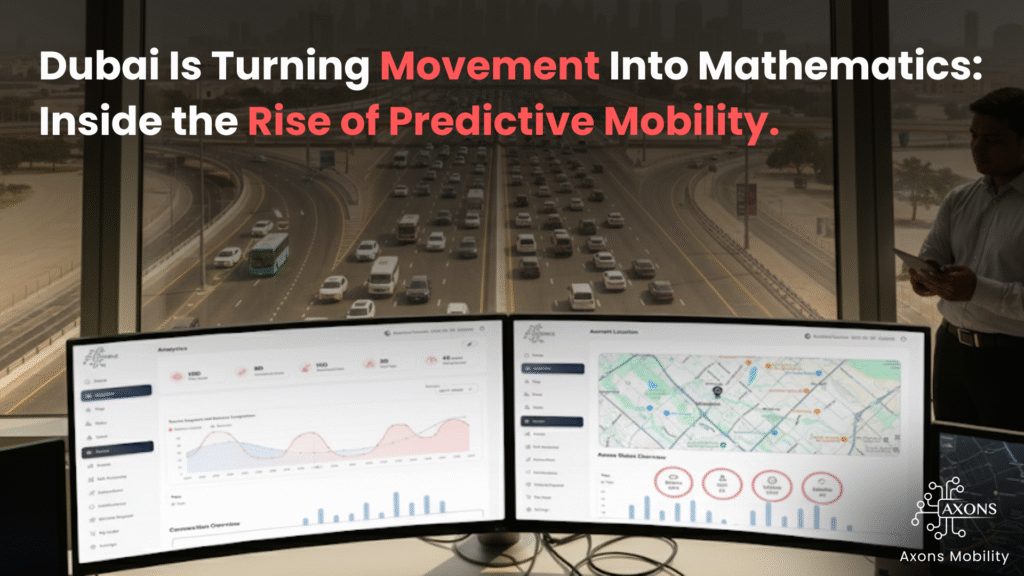
Predictive Mobility Dubai Inside the Rise of Smart Urban Transport In Dubai, transportation is no longer just about roads, vehicles, or traffic lights it’s about data. Massive streams of real-time information are being transformed into mathematical models that predict how people and vehicles move across the city. This shift marks the rise of predictive mobility, where movement into mathematics becomes measurable, forecastable, and optimizable.
Dubai’s smart city vision is built on a simple idea: if you can understand mobility patterns at scale, you can design cities that flow better.
From Smart Roads to Predictive Systems
Traditional traffic management reacts to congestion after it happens. Predictive mobility flips this model.
By integrating data and advanced analytics, Dubai is effectively turning movement into mathematics, reshaping urban life.
Instead of responding late, Dubai uses sensors, connected infrastructure, and analytics platforms to anticipate demand before bottlenecks form. Data from cameras, GPS-enabled fleets, ride-sharing platforms, and public transport feeds into centralized systems that model:
- Peak-hour traffic surges
- Neighborhood-level travel behavior
- Fleet utilization patterns
- Environmental impact per route
This turns mobility into a living equation constantly updated, continuously optimized.
The result? Faster commutes, smarter routing, reduced emissions, and better use of city resources.
Why Predictive Mobility Matters for Growing Cities
Dubai’s population and vehicle density continue to rise. Simply adding more roads or EVs won’t solve congestion. What does help is understanding how movement evolves over time.
Predictive mobility enables cities to:
- Forecast congestion hours in advance
- Dynamically reroute fleets and buses
- Balance supply and demand across zones
- Plan infrastructure based on real usage data
- Reduce idle time for commercial vehicles
In essence, cities become distributed systems and fleets become intelligent nodes inside them.
Where Axons Mobility Fits In
This is where companies like Axons Mobility play a critical role.
Axons Mobility focuses on turning raw fleet and mobility data into real-time intelligence. Instead of static dashboards, modern fleet platforms now provide:
- Live vehicle telemetry
- Predictive maintenance signals
- Route optimization insights
- Driver behavior analytics
- Carbon impact tracking
By applying streaming data and machine learning, Axons Mobility helps operators move from reactive fleet management to proactive decision-making aligning perfectly with Dubai’s predictive mobility direction.
For logistics providers, ride-hailing operators, and urban fleets, this means fewer breakdowns, smarter dispatching, and higher operational efficiency.
Predictive mobility isn’t just a government initiative it’s becoming a competitive advantage for every mobility-driven business.
Turning Movement Into Mathematics
At its core, predictive mobility is about converting physical motion into mathematical models:
- Every trip becomes a data point
- Every stop becomes a signal
- Every delay becomes a variable
When enough of these variables connect, cities can simulate future scenarios:
What happens if demand spikes in Business Bay at 6 PM?
Which routes will overload during major events?
How can fleets rebalance before shortages appear?
Dubai is actively building this capability, blending AI, IoT, and urban analytics to make transportation systems adaptive rather than static.
The Road Ahead
Dubai’s approach signals a broader global shift. Mobility is no longer infrastructure-first it’s data-first.
As predictive systems mature, we’ll see:
- Autonomous fleets guided by real-time demand models
- Dynamic pricing based on congestion probability
- City planning driven by behavioral analytics
- Fleets operating as coordinated networks, not isolated vehicles
Platforms like Axons Mobility are helping bridge the gap between city-scale intelligence and fleet-level execution translating complex mobility data into practical, everyday decisions.
Final Thoughts
Dubai is proving that the future of transportation isn’t just electric or autonomous it’s mathematical.
By transforming movement into predictive models, the city is building a mobility ecosystem that learns, adapts, and improves continuously. For fleet operators and smart mobility platforms alike, this marks a new era where data doesn’t just describe the city it drives it.
And as predictive mobility accelerates, those who master real-time fleet intelligence today will shape how cities move tomorrow.


