
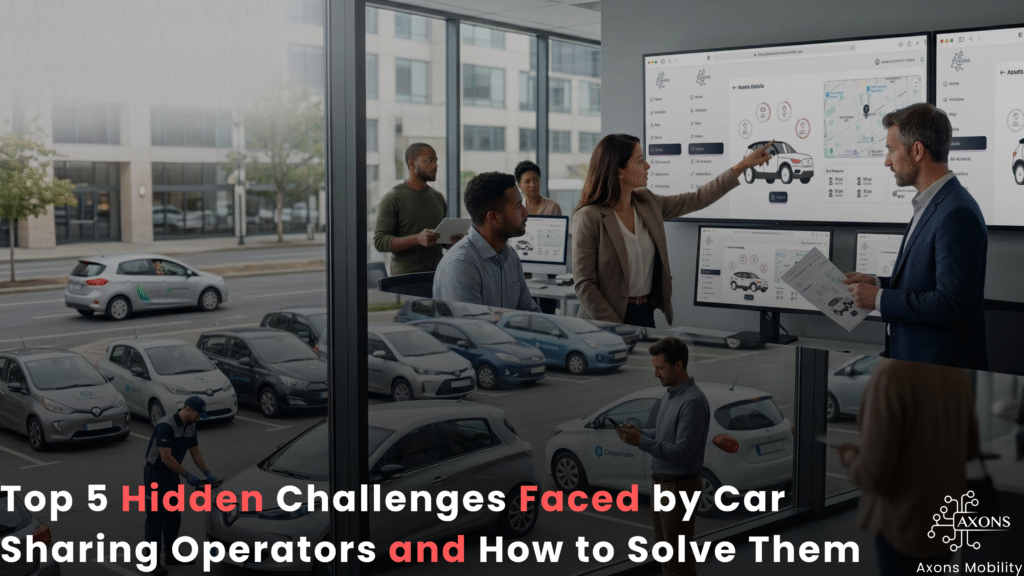
Discover the top 5 challenges faced by car sharing operators, including vehicle utilization, fleet maintenance, customer retention, insurance management, and operational costs. Learn how modern mobility platforms like Axons Mobility help solve them.
Introduction
The global car sharing market continues to grow as consumers increasingly prefer flexible and sustainable transportation options over vehicle ownership. However, while the demand for shared mobility services is rising, operators face several operational challenges that directly impact profitability and customer satisfaction.
Whether you’re launching a new car-sharing business or scaling an existing fleet, overcoming these obstacles is critical for long-term success. Industry leaders such as Wunder Mobility, ATOM Mobility, Ridecell, Vulog, and Axons Mobility are continuously developing innovative solutions to help operators optimize their operations.
In this article, we’ll explore the top five challenges faced by car sharing operators and discuss practical ways to overcome them.
1. Low Vehicle Utilization
The Challenge
Vehicle utilization is one of the most important metrics for any car-sharing business. Idle vehicles generate costs without producing revenue, reducing overall profitability.
Common reasons for low utilization include:
- Poor fleet distribution
- Limited service areas
- Inaccurate demand forecasting
- Seasonal fluctuations
- Inefficient pricing strategies
How to Solve It
Modern mobility platforms use data analytics and AI-powered insights to predict demand and optimize fleet placement.
Key strategies include:
- Dynamic pricing based on demand
- Demand heatmaps
- Automated vehicle relocation
- Peak-hour optimization
- Real-time fleet monitoring
How Axons Mobility Helps
Axons Mobility provides real-time fleet visibility, utilization analytics, and intelligent fleet management tools that help operators maximize vehicle usage and increase revenue.
2. Fleet Maintenance and Downtime
The Challenge
Unexpected vehicle breakdowns lead to service interruptions, customer complaints, and lost revenue. Managing maintenance schedules across hundreds of vehicles can quickly become complex.
Common maintenance issues include:
- Delayed servicing
- Vehicle wear and tear
- Battery management for EV fleets
- Lack of preventive maintenance
- Manual maintenance tracking
How to Solve It
Operators should adopt predictive maintenance systems that monitor vehicle health and schedule maintenance before issues become critical.
Best practices include:
- Automated maintenance alerts
- Vehicle inspection workflows
- Telematics integration
- Driver damage reporting
- Digital service records
Industry Example
Leading mobility platforms such as Ridecell and Vulog leverage connected vehicle data to reduce downtime and improve fleet availability.
How Axons Mobility Helps
Axons Mobility offers integrated fleet management capabilities that allow operators to track vehicle conditions, automate maintenance schedules, and minimize costly downtime.
3. Customer Retention and Loyalty
The Challenge
Acquiring customers is expensive. Retaining them is essential for sustainable growth.
Many operators struggle with:
- Low repeat bookings
- High customer churn
- Poor user experience
- Inconsistent service quality
- Limited customer engagement
How to Solve It
Focus on delivering a seamless customer experience through:
- Mobile-first booking journeys
- Loyalty programs
- Personalized promotions
- Fast customer support
- Subscription-based offerings
Industry Example
Companies like Wunder Mobility and ATOM Mobility support operators with customer engagement features that improve retention and increase lifetime customer value.
How Axons Mobility Helps
Axons Mobility enables operators to create personalized customer experiences through flexible pricing models, automated communication tools, and user-friendly mobile applications.
4. Insurance and Risk Management
The Challenge
Insurance remains one of the most complex aspects of operating a car-sharing business.
Operators often face:
- High insurance premiums
- Fraudulent claims
- Accident management challenges
- Driver verification issues
- Regulatory compliance requirements
How to Solve It
A strong risk management strategy should include:
- Driver license verification
- Identity verification systems
- Driver behavior monitoring
- Automated incident reporting
- Usage-based insurance programs
Industry Trend
Many modern shared mobility providers are partnering with insurance technology companies to reduce risk and create more flexible insurance models.
How Axons Mobility Helps
Axons Mobility supports secure user onboarding, digital verification processes, and detailed trip tracking, helping operators improve compliance and reduce operational risks.
5. Rising Operational Costs
The Challenge
Operational expenses continue to rise due to increasing labor costs, vehicle maintenance expenses, insurance premiums, and infrastructure investments.
Major cost drivers include:
- Fleet operations
- Customer support
- Vehicle maintenance
- Insurance
- Administrative overhead
How to Solve It
The key to reducing operational costs is automation.
Operators should invest in:
- Self-service vehicle access
- Automated billing and payments
- Digital fleet management
- Real-time analytics dashboards
- Workflow automation
Industry Example
Successful mobility operators use platforms such as Axons Mobility, Ridecell, and ATOM Mobility to automate routine operations and reduce administrative workloads.
How Axons Mobility Helps
Axons Mobility’s end-to-end mobility management platform helps operators automate booking management, payments, fleet operations, and customer communication, significantly reducing operational costs.
Why Technology Is the Key to Sustainable Car Sharing Growth
As the shared mobility market becomes more competitive, operators need technology that enables efficiency, scalability, and profitability.
Platforms like Axons Mobility provide the tools needed to:
- Increase vehicle utilization
- Reduce fleet downtime
- Improve customer retention
- Strengthen risk management
- Lower operational costs
By addressing these challenges proactively, car-sharing businesses can build sustainable operations and achieve long-term growth.
Conclusion
Car-sharing operators face numerous challenges, but the right technology platform can transform these obstacles into growth opportunities. From improving vehicle utilization and maintenance management to enhancing customer retention and controlling operational costs, investing in a comprehensive mobility platform is essential.
As shared mobility continues to evolve, solutions like Axons Mobility empower operators to streamline operations, improve customer experiences, and maximize profitability in an increasingly competitive market.


