
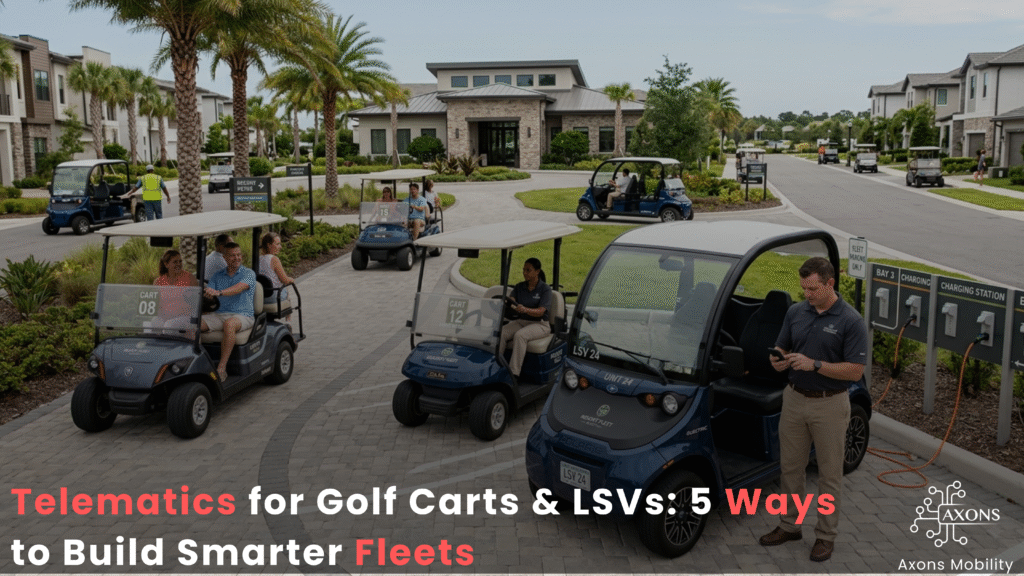
Discover how telematics for golf carts and LSVs helps manufacturers build smarter fleets with GPS tracking, security, maintenance, and real-time monitoring.
Golf carts and Low-Speed Vehicles (LSVs) are no longer limited to golf courses and private communities. They are increasingly being used for resorts, airports, campuses, industrial facilities, residential communities, hospitality, and shared mobility services. As these fleets grow, manufacturers and operators are looking for better ways to monitor, manage, and protect vehicles.
This is where telematics for golf carts and LSVs is becoming increasingly important. By combining GPS, IoT connectivity, vehicle data, and fleet management software, telematics can turn conventional low-speed vehicles into connected assets.
1. Real-Time Visibility Across Golf Cart Fleets
Managing a fleet becomes difficult when operators cannot see where their vehicles are or how they are being used. GPS-enabled telematics provides real-time visibility into vehicle location and movement.
Fleet managers can monitor multiple golf carts and LSVs from a centralized dashboard, helping them understand vehicle utilization and identify operational inefficiencies.
For manufacturers, integrating telematics directly into vehicles can also create additional value for fleet customers by making connected fleet management available from day one.
Axons Mobility provides GPS and IoT-based solutions that can connect vehicles to a centralized fleet management platform, giving operators better visibility into their assets.
2. Smarter Fleet Utilization
Golf carts and LSVs are often used across large properties, campuses, resorts, and commercial environments. Some vehicles may be heavily used while others remain idle for long periods.
Telematics data can help operators understand vehicle usage, trip patterns, operating hours, and utilization levels. These insights can support better vehicle allocation and fleet planning.
Instead of making decisions based on assumptions, fleet managers can use actual vehicle data to determine which vehicles are being used most and where additional capacity may be required.
3. Geofencing and Vehicle Security
Security is another important reason manufacturers are adding telematics to golf carts and LSVs.
Geofencing allows fleet operators to create virtual boundaries around specific areas. If a vehicle enters or leaves a predefined zone, the system can generate an alert.
This can be particularly useful for resorts, campuses, industrial sites, and private communities where vehicles are expected to operate within designated areas.
With Axons Mobility’s connected vehicle technology, features such as GPS tracking, geofencing, alerts, and remote vehicle controls can help operators improve fleet security and respond faster for company like Club Car to unauthorized vehicle movement.
4. Predictive Maintenance and Vehicle Health
Unexpected breakdowns can disrupt operations and increase maintenance costs. For businesses operating dozens or hundreds of golf carts and LSVs, keeping vehicles available is essential.
Connected telematics can provide valuable vehicle information that helps operators monitor vehicle health and identify potential maintenance requirements.
Moving from reactive maintenance to a more proactive approach can help fleet operators reduce unnecessary downtime and improve vehicle availability.
Axons Mobility’s IoT and telematics ecosystem can help bring vehicle data into a centralized platform, allowing fleet operators to gain better operational visibility and make more informed maintenance decisions.
5. Why Manufacturers Are Going Connected
For LSV and golf cart manufacturers, connectivity is becoming more than an optional feature. It can become a way to differentiate vehicles, improve customer value, and support new fleet-based business models.
Connected vehicles can provide manufacturers and fleet operators with valuable insights after the vehicle leaves the factory. Data can support better fleet management, maintenance planning, security, and customer service.
Telematics can also create opportunities for manufacturers to offer connected services alongside their vehicles, creating additional digital value throughout the vehicle lifecycle.
The Future of Connected Golf Carts and LSVs
The golf cart and LSV market is moving toward a more connected future. GPS tracking, IoT connectivity, telematics, geofencing, vehicle monitoring, and fleet intelligence can transform these vehicles from standalone assets into connected mobility platforms.
For manufacturers, adopting telematics can provide a competitive advantage while helping their customers manage vehicles more efficiently.
Axons Mobility enables manufacturers and fleet operators to build this connected ecosystem through integrated GPS, IoT hardware, telematics, and fleet management software. By connecting vehicles with intelligent digital platforms, Axons Mobility helps businesses gain visibility, improve security, and manage their fleets more effectively.
As golf carts and LSVs continue expanding into commercial and shared mobility applications, connected technology will play an increasingly important role in how these fleets are operated.


