
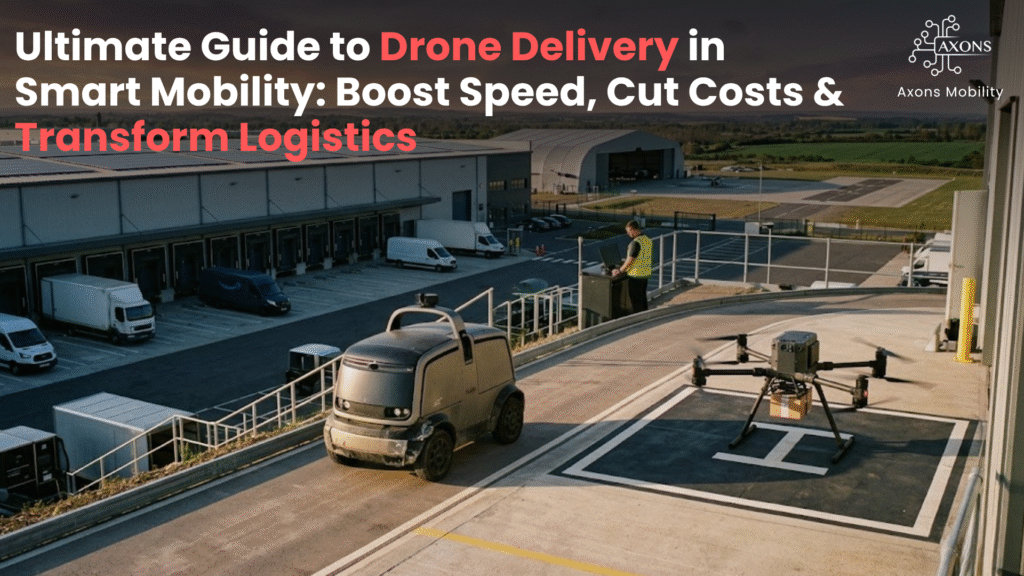
Introduction: The New Era of Smart Mobility
The logistics industry is undergoing a massive transformation, driven by innovation in smart mobility. One of the most powerful and disruptive technologies leading this change is drone and autonomous delivery systems. Businesses today are not just looking for faster delivery they are looking for smarter, cost-efficient, and scalable solutions.
Companies like Axons Mobility are at the forefront of this shift, helping enterprises adopt advanced mobility solutions that reduce dependency on traditional fuel-based logistics while improving operational efficiency.
What is Drone Delivery in Smart Mobility?
Drone delivery refers to the use of autonomous aerial vehicles to transport goods from one location to another without human intervention. These drones are powered by AI, GPS tracking, and IoT systems that enable real-time navigation and route optimization.
In the context of smart mobility, drone delivery is not a standalone solution it is part of a larger ecosystem that includes electric vehicles, connected fleets, and intelligent logistics platforms.
Key Benefits of Drone Delivery Systems
1. Faster Delivery Times
Drones fly directly to the destination, eliminating delays caused by traffic congestion. This significantly reduces delivery time, especially in urban areas where road networks are overloaded.
2. Reduced Operational Costs
Traditional delivery models require drivers, fuel, and vehicle maintenance. Autonomous drones reduce these costs by automating the entire process, making logistics more profitable for businesses.
3. Improved Accessibility
Drone delivery enables businesses to reach remote and underserved areas where traditional transportation infrastructure is weak or unavailable. This opens new market opportunities for companies.
4. Smart Route Optimization
Using AI and real-time data, drones can choose the most efficient routes, saving both time and energy. This improves overall delivery performance.
How Axons Mobility is Driving Innovation
Axons Mobility is leveraging smart mobility technologies to create integrated logistics ecosystems. By combining drone delivery with IoT-enabled fleet management and data-driven insights, the company is helping businesses move toward a more efficient future.
Their approach focuses on:
- Reducing fuel dependency
- Enhancing real-time tracking
- Optimizing delivery networks
- Supporting sustainable logistics
This makes drone delivery not just an innovation, but a strategic advantage.
Challenges in Drone Delivery Adoption
While drone delivery offers numerous benefits, there are still some challenges that businesses must address:
- Regulatory restrictions and compliance
- Limited battery life of drones
- Payload capacity limitations
- Air traffic management concerns
However, with continuous advancements in technology and supportive government policies, these challenges are gradually being resolved.
Future of Drone Delivery in Smart Mobility
The future of logistics lies in automation and intelligence. Drone delivery is expected to become a core component of smart mobility ecosystems in the coming years.
Businesses that adopt these technologies early will gain a competitive edge by:
- Delivering faster than competitors
- Reducing operational costs
- Improving customer satisfaction
With companies like Axons Mobility leading the way, the transition toward autonomous logistics is accelerating rapidly.
Real-World Applications of Drone Delivery
Drone delivery is already being implemented across multiple industries, proving its real-world value. Global companies like Amazon are testing drone-based delivery systems to ensure ultra-fast shipping, while healthcare organizations are using drones to transport vaccines, blood samples, and emergency medicines to remote areas. This shift highlights how autonomous delivery is not just about convenience but also about saving lives and improving service efficiency. For smart mobility providers like Axons Mobility, integrating such real-world applications into their ecosystem can create a seamless and future-ready logistics network that is both reliable and scalable.
Conclusion
Drone delivery is no longer a futuristic concept it is a practical solution transforming the logistics industry today. As smart mobility continues to evolve, businesses must adapt to these innovations to stay competitive.
The real question is not whether drone delivery will dominate logistics
it’s whether your business is ready for it.


