
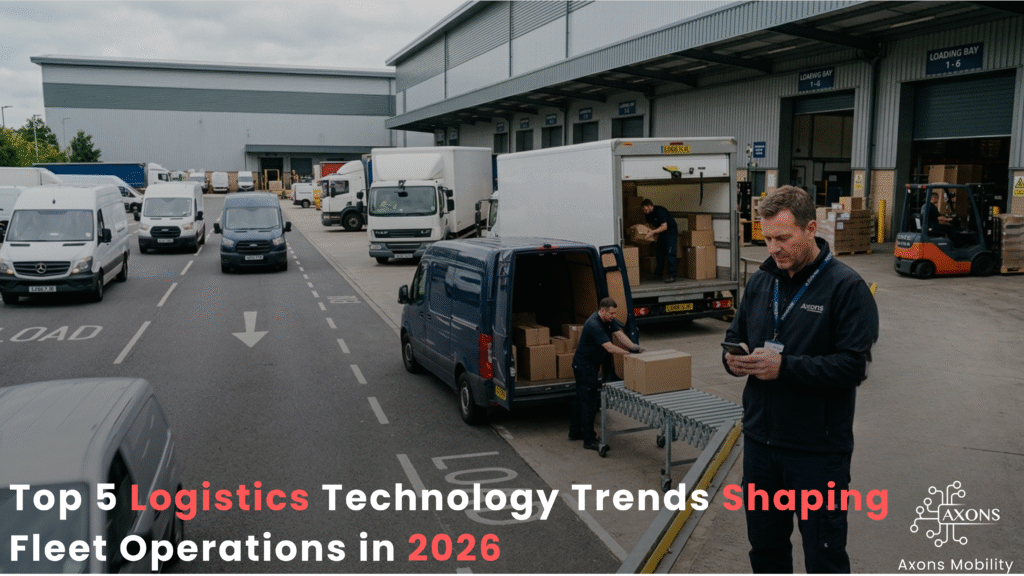
Discover the top 5 logistics technology trends shaping fleet operations in 2026, from AI and IoT to predictive maintenance and connected vehicles.
The logistics industry is entering a new era of connected and data-driven fleet operations. Rising fuel costs, delivery expectations, vehicle downtime, and growing customer demands are pushing logistics companies to adopt smarter technology. In 2026, logistics technology trends are increasingly focused on automation, real-time visibility, predictive insights, and connected vehicles.
For fleet operators, adopting the right technology is no longer just about tracking vehicles. It is about creating a connected ecosystem that improves efficiency, safety, security, and vehicle utilization.
Here are the top 5 logistics technology trends shaping fleet operations in 2026.
1. AI-Powered Fleet Management
Artificial intelligence is becoming an important part of modern logistics operations. AI can analyze large amounts of fleet data to identify patterns, predict operational issues, and support better decision-making.
Fleet managers can use AI-powered insights to understand vehicle utilization, driver behavior, fuel consumption, maintenance requirements, and route performance.
Instead of relying only on historical reports, logistics companies can use real-time data to make faster operational decisions.
Solutions such as Axons Mobility combine connected vehicle data with intelligent dashboards, helping fleet operators gain better visibility into their vehicles and operations.
2. IoT and Real-Time Fleet Tracking
IoT is one of the most important logistics technology trends in 2026. Connected vehicles can continuously transmit information about location, movement, vehicle status, and operational conditions.
Real-time GPS tracking allows fleet managers to know where vehicles are and monitor their movement through a centralized platform. This can help improve dispatching, vehicle utilization, and customer communication.
Axons Mobility provides IoT-based vehicle tracking and telematics solutions designed to connect vehicles with a centralized fleet management platform. With real-time visibility, logistics businesses can monitor their fleets and respond quickly when unexpected situations occur.
3. Predictive Maintenance and Vehicle Health Monitoring
Unexpected vehicle breakdowns can create delivery delays, increase repair expenses, and reduce fleet availability. This is why predictive maintenance is becoming increasingly important.
Modern telematics systems can collect vehicle data and help identify potential maintenance issues before they become major problems. Fleet managers can use this information to plan servicing and reduce unnecessary downtime.
With connected vehicle data and fleet dashboards, Axons Mobility can help businesses move from reactive maintenance toward a more proactive approach.
For logistics companies operating large fleets, improving vehicle availability can directly contribute to better operational efficiency.
4. Connected Vehicles and Driver Monitoring
Connected vehicles are changing how logistics companies manage drivers and vehicles. Telematics can provide valuable information about driving patterns, including speeding, harsh braking, rapid acceleration, and other behaviors.
Driver behavior monitoring can help fleet managers identify risky driving patterns and develop better safety programs. It can also support more efficient vehicle usage.
Connected vehicle technology can bring vehicle data, driver information, alerts, and fleet performance into one ecosystem.
Axons Mobility’s connected mobility solutions are designed to give operators greater visibility into vehicle activity and driver behavior, helping businesses build safer and more accountable fleet operations.
5. Advanced Fleet Security and Geofencing
Vehicle theft and unauthorized vehicle usage remain major concerns for logistics companies. As fleets become increasingly connected, security technology is also becoming more sophisticated.
Geofencing allows fleet managers to create virtual geographic boundaries around specific areas. When a vehicle enters or leaves a defined zone, the system can generate an alert.
Combined with real-time tracking and security features, geofencing can help logistics companies monitor vehicle movements and respond faster to suspicious activity.
Axons Mobility supports connected fleet security through features such as GPS tracking, geofencing, alerts, and remote vehicle control capabilities. These technologies can help logistics operators improve visibility and protect valuable fleet assets.
The Future of Logistics Fleet Operations
The logistics industry is moving toward fleets that are increasingly connected, intelligent, automated, and data-driven. AI, IoT, predictive maintenance, connected vehicles, and fleet security are becoming essential technologies for companies looking to improve operational performance.
For logistics businesses, the goal is not simply to collect more data. The real value comes from turning vehicle data into actionable insights.
Axons Mobility brings IoT, telematics, real-time tracking, fleet intelligence, and security technologies together to help businesses build smarter connected fleets.
As logistics operations become more complex in 2026, adopting the right logistics technology trends can help fleet operators reduce downtime, improve visibility, increase vehicle utilization, and create more efficient operations.


