
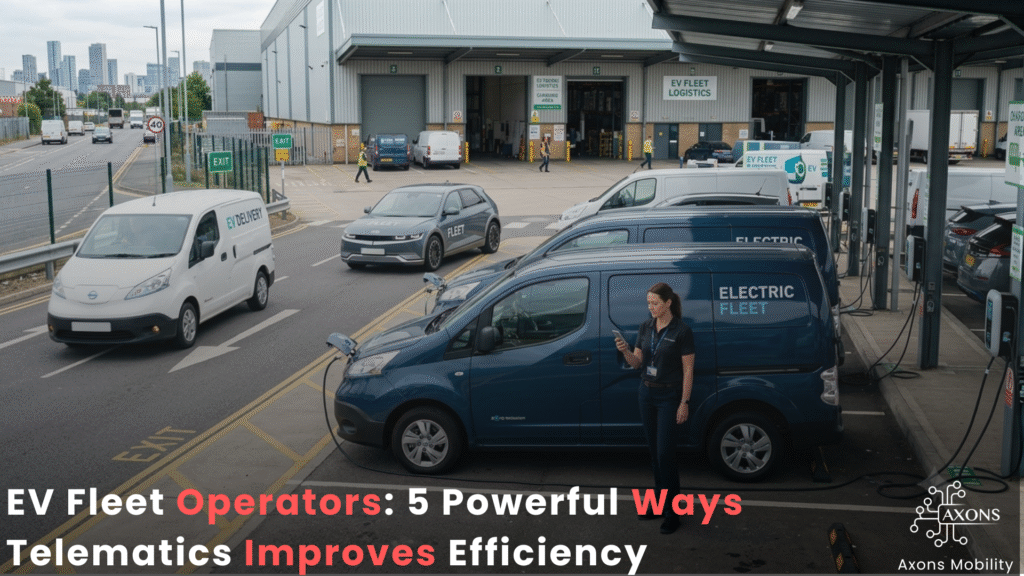
Discover 5 powerful ways EV fleet operators can improve efficiency with telematics, from real-time tracking and charging to battery health and maintenance.
The shift to electric vehicles is changing how fleets operate. While EVs can offer lower energy and maintenance costs, fleet operators also face new challenges around battery health, charging, range, vehicle utilization, and uptime. Telematics can help turn these challenges into measurable operational improvements.
Modern EV telematics can provide real-time information about vehicle location, battery status, charging activity, and driving behavior, giving fleet managers the data they need to make faster decisions.
For EV fleet operators, here are five practical ways telematics can improve fleet efficiency.
1. Improve Vehicle Utilization With Real-Time Tracking
An EV that is sitting idle is not generating value. Fleet operators need to know which vehicles are active, available, charging, or underutilized.
GPS-enabled telematics provides real-time visibility into vehicle locations and movement. Fleet managers can use this information to allocate vehicles more effectively, monitor trips, and identify inefficient utilization patterns.
For example, if one vehicle is consistently underused while another is operating at high capacity, managers can adjust assignments based on actual data rather than assumptions.
Axons Mobility connects vehicles to a centralized fleet management platform, giving operators real-time visibility into their fleet and helping them make more informed utilization decisions.
2. Optimize Charging and Range Management
Charging is one of the biggest operational differences between EV and conventional fleets. Poor charging planning can result in vehicles being unavailable when they are needed most.
Telematics can provide information such as battery state of charge, charging activity, location, and energy consumption, depending on the vehicle and available data integrations. This allows fleet managers to better coordinate charging with vehicle schedules.
Low-battery alerts can also help operators intervene before a vehicle becomes stranded or misses a scheduled trip.
Axons Mobility’s and Samsara connected vehicle ecosystem can bring vehicle and location data into a unified platform, helping operators improve visibility around EV operations and make smarter decisions about vehicle availability.
3. Monitor Battery Health and Vehicle Performance
The battery is one of the most important assets in an EV. Over time, battery capacity can decline, affecting range and vehicle availability.
EV-specific telematics can monitor parameters such as State of Charge (SoC), State of Health (SoH), charging cycles, temperature, and other vehicle data, depending on the vehicle’s available interfaces.
Monitoring this information can help operators identify vehicles that may require attention and plan maintenance before battery-related problems cause major operational disruptions.
With Axons Mobility’s IoT and telematics capabilities, fleet operators can create a connected layer between vehicles and their fleet management systems, helping them gain greater visibility into vehicle performance.
4. Reduce Downtime With Predictive Maintenance
Vehicle downtime directly affects fleet productivity. A vehicle that unexpectedly requires maintenance can disrupt routes, deliveries, or passenger services.
Telematics can help operators move from reactive maintenance toward a more proactive approach by collecting vehicle performance data and identifying potential issues.
Instead of waiting for a vehicle to fail, fleet managers can use available vehicle data, alerts, and historical patterns to schedule maintenance at more appropriate times.
Axons Mobility combines IoT connectivity, vehicle data, real-time monitoring, and fleet intelligence to help businesses build a more proactive approach to fleet management.
5. Improve Driver Efficiency and Fleet Safety
Driver behavior can influence both safety and EV efficiency. Aggressive acceleration, harsh braking, speeding, and inefficient driving patterns can affect energy consumption and vehicle performance.
Telematics can provide driver behavior data that fleet managers can use to identify risky or inefficient driving patterns. This creates an opportunity for coaching and continuous improvement.
For EV operators, smoother driving can also help improve energy efficiency and make better use of available battery range.
Axons Mobility supports connected fleet monitoring with features such as driver behavior insights, real-time alerts, GPS tracking, and geofencing, giving operators greater visibility into how vehicles are being used.
Building a Smarter EV Fleet With Telematics
The future of EV fleet management is not simply about replacing combustion vehicles with electric ones. It is about creating a connected and data-driven fleet operation.
From real-time tracking and charging visibility to battery monitoring, predictive maintenance, and driver insights, telematics can help EV operators improve utilization, reduce downtime, and make better operational decisions.
Axons Mobility helps businesses build this connected ecosystem through IoT hardware, GPS tracking, telematics, fleet management software, real-time monitoring, and intelligent fleet insights.
As EV fleets continue to scale, operators that can turn vehicle data into actionable insights will be better positioned to improve efficiency and maximize the value of every vehicle.


