
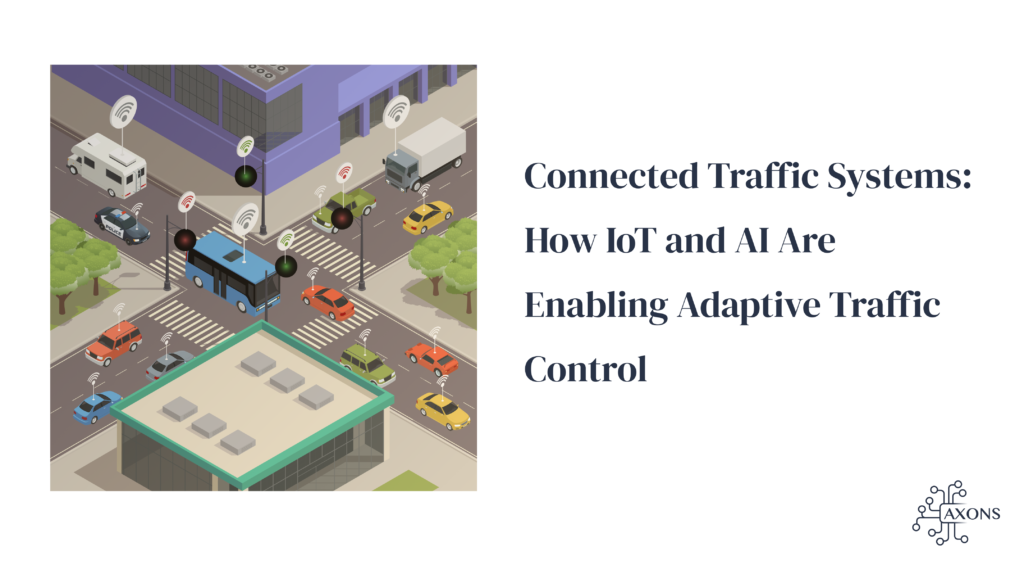
Modern cities are dealing with increasing traffic congestion, pollution, and inefficiencies in traffic management. Traditional traffic control systems, based on static signals and pre-set timings, are no longer sufficient to handle dynamic urban mobility. IoT (Internet of Things) and AI-driven adaptive traffic control systems are revolutionizing the way traffic flows, improving efficiency, safety, and sustainability.
The Need for Smart Traffic Systems
Urbanization has led to higher vehicle density, unpredictable congestion, and increased road safety concerns. Manual traffic control or fixed-timing signals cannot adapt in real-time to dynamic traffic conditions. Here’s where IoT and AI-powered adaptive traffic control step in:
- Real-time traffic optimization using AI and machine learning
- Automated congestion management to reduce bottlenecks
- Improved road safety through predictive analytics
- Lower environmental impact with optimized vehicle movement
How IoT and AI Enable Adaptive Traffic Control
1. Smart Traffic Lights
Traditional traffic lights follow fixed schedules, but AI-powered traffic signals adjust timings dynamically based on real-time data. IoT sensors collect information from vehicles, cameras, and GPS systems to optimize green light duration and reduce waiting time.
Example: Cities like Los Angeles and Singapore use AI-based adaptive signal control to monitor intersections and adjust traffic flow in real time, reducing congestion.
2. Vehicle-to-Infrastructure (V2I) Communication
Connected vehicles equipped with IoT devices communicate with traffic systems to share location, speed, and congestion data. This allows traffic control centers to reroute vehicles dynamically, reducing travel times and preventing gridlocks.
Example: Europe’s C-Roads project is implementing V2I communication to enhance traffic safety and efficiency.
3. AI-Based Traffic Predictions
AI algorithms analyze historical traffic data, weather conditions, and real-time inputs to predict congestion before it occurs. This helps authorities proactively manage traffic rather than react to issues.
Example: Google Maps and Waze use AI-powered traffic prediction to suggest faster routes, avoiding congestion hotspots.
4. Smart Parking Systems
Connected IoT parking sensors detect vacant spots and share the data in real-time via mobile apps, reducing the time spent searching for parking. This minimizes fuel waste and improves traffic flow.
Example: Barcelona’s smart parking system uses IoT sensors to guide drivers to available parking spaces.
5. Emergency Vehicle Priority Systems
AI-integrated IoT traffic systems can prioritize emergency vehicles by adjusting signals automatically, ensuring ambulances, fire trucks, and police vehicles reach their destinations faster.
Example: Dubai’s AI-driven emergency vehicle system allows traffic lights to turn green automatically for approaching emergency vehicles.
Benefits of AI and IoT in Traffic Management
Reduced Congestion: Intelligent signals cut down idle times and keep traffic moving.
Lower Emissions: Optimized traffic flow reduces fuel consumption and CO₂ emissions.
Improved Safety: Real-time alerts prevent accidents and enhance pedestrian safety.
Enhanced Efficiency: Smart routes and AI-driven predictions help reduce commute times.
Axons Mobility’s Role in Smart Traffic Systems
At Axons Mobility, we specialize in IoT solutions that enhance traffic control systems by integrating connected sensors, AI-driven analytics, and real-time data management.
🔹 IoT-Enabled Traffic Sensors: Our devices collect real-time traffic patterns to optimize signal timing.
🔹 V2X (Vehicle-to-Everything) Communication: Axons IoT devices connect vehicles and infrastructure for seamless traffic control.
🔹 Smart Data Analytics Dashboard: We provide predictive traffic insights to optimize city traffic networks.
🔹 AI-Driven Congestion Management: Our AI-based algorithms help cities adjust signal timings and reroute traffic in real-time.
By integrating IoT and AI-driven solutions, Axons Mobility is committed to making urban mobility safer, smarter, and more sustainable.
The Future of Connected Traffic Systems
As cities continue to grow, adaptive traffic control will become a necessity rather than a luxury. Governments and urban planners must invest in IoT and AI-powered solutions to create efficient, intelligent, and eco-friendly transportation networks.
AI-based predictive models will further refine real-time congestion management.
5G integration will enhance vehicle-to-infrastructure communication.
Autonomous vehicles will leverage connected traffic systems for safer navigation.
Conclusion
The future of urban mobility lies in connected traffic systems powered by IoT and AI. By enabling real-time decision-making, predictive analytics, and automated adjustments, cities can eliminate congestion, improve road safety, and reduce environmental impact.
Axons Mobility is ready to drive this transformation with intelligent traffic solutions that integrate hardware, software, and AI analytics to create a seamless, connected transportation ecosystem.
Ready to upgrade your city’s traffic management?
Let’s build smarter roads for a smarter future!
📌 Stay ahead in the IoT revolution—stay updated with Connected Traffic Systems with Axons Mobility!
#SmartTraffic #IoT #AI #ConnectedMobility #TrafficControl #UrbanMobility #PlugNplay #AxonsMobility #AIPoweredIoT #SmartCities


