
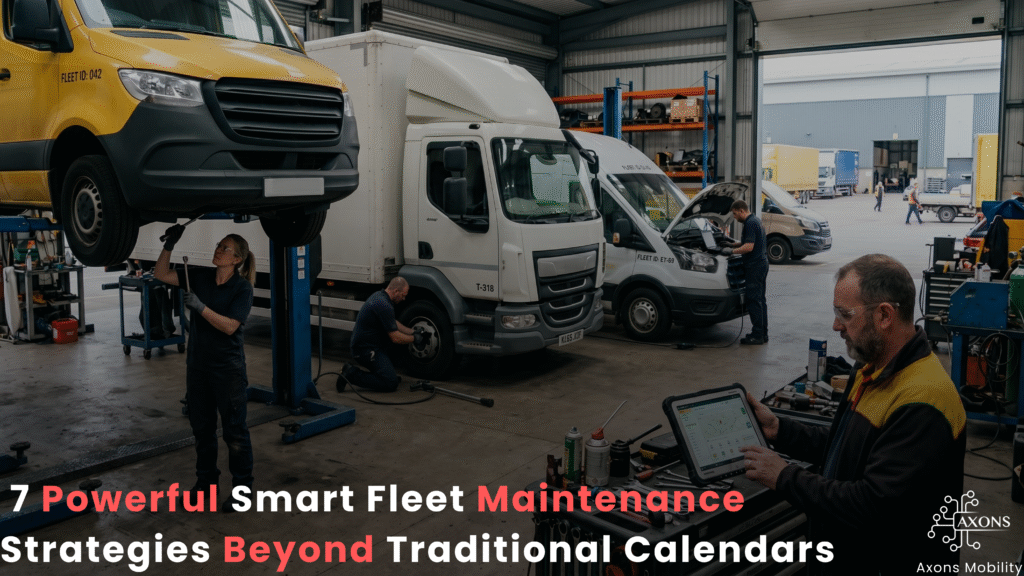
Discover 7 powerful smart fleet maintenance strategies that go beyond traditional calendars. Learn how Axons Mobility helps reduces downtime, improve vehicle performance, and optimize fleet operations with real-time IoT insights.
As fleets grow larger and delivery expectations become faster, relying only on fixed schedules can lead to costly breakdowns, unnecessary servicing, and operational downtime. This is where smart fleet management platforms like Axons Mobility are transforming the way businesses manage vehicle health and performance.
In this blog, we’ll explore why traditional calendars fall short for fleet maintenance and how intelligent IoT-powered solutions can improve efficiency, reduce costs, and increase fleet reliability.
The Problem with Traditional Fleet Maintenance Scheduling
Traditional fleet maintenance systems usually rely on static schedules such as:
- Oil changes every 3 months
- Tire checks every 10,000 km
- Brake servicing twice a year
- Engine inspection every quarter
While this approach appears organized, it ignores the real-world conditions in which vehicles operate.
A delivery van running 200 km daily in city traffic experiences very different wear and tear compared to a vehicle used occasionally on highways. Yet calendar-based systems treat them the same.
This creates several operational problems.
1. Calendars Ignore Real-Time Vehicle Usage
One of the biggest limitations of traditional scheduling is the lack of real-time data.
Vehicles operate differently based on:
- Driving behavior
- Route conditions
- Traffic congestion
- Load capacity
- Idle time
- Fuel efficiency
- Weather conditions
A fixed maintenance calendar cannot adapt to these constantly changing variables.
For example, a truck operating under heavy loads may require brake servicing much earlier than scheduled. If maintenance is delayed because the calendar date hasn’t arrived yet, it can result in vehicle failure or safety risks.
Smart platforms like samsara solve this issue using IoT-based vehicle monitoring. Instead of relying only on dates, the system tracks actual vehicle performance and alerts fleet managers when maintenance is genuinely needed.
2. Reactive Maintenance Increases Downtime
Traditional maintenance methods often become reactive rather than proactive.
Fleet operators usually discover problems only after:
- A breakdown occurs
- The driver reports an issue
- Fuel efficiency drops
- The vehicle stops operating
Unexpected vehicle downtime can severely impact delivery schedules, customer satisfaction, and operational costs.
A single breakdown can lead to:
- Missed deliveries
- Increased repair expenses
- Driver delays
- Customer complaints
- Revenue loss
Modern fleet solutions use predictive maintenance to identify potential failures before they happen.
Using sensors and telematics, Axons Mobility helps businesses monitor engine health, battery performance, fuel usage, and vehicle diagnostics in real time. This allows maintenance teams to act early and avoid costly disruptions.
3. Manual Scheduling Leads to Human Errors
Managing maintenance manually through spreadsheets or calendars becomes difficult as fleet size increases.
Common issues include:
- Missed service dates
- Duplicate entries
- Incorrect maintenance records
- Lack of service history
- Delayed reminders
Human errors in fleet maintenance can directly impact vehicle performance and compliance.
Automated fleet management systems eliminate these risks by providing:
- Automatic service reminders
- Centralized maintenance logs
- Digital inspection records
- Real-time alerts
- Maintenance history tracking
With Axons Mobility, fleet managers can automate maintenance scheduling and monitor all vehicles from a single dashboard.
4. Traditional Calendars Cannot Predict Failures
Preventive maintenance based only on dates does not accurately predict component failures.
Many vehicle parts wear out depending on operational conditions rather than time alone.
For example:
- Tires may wear faster on rough roads
- Batteries may degrade due to excessive idling
- Engines may overheat in high-temperature environments
- EV battery performance may reduce under improper charging patterns
Traditional systems lack the intelligence to detect these early warning signs.
IoT-enabled fleet solutions continuously analyze vehicle behavior and generate predictive insights. This allows businesses to repair or replace components before major failures occur.
Predictive maintenance not only improves vehicle reliability but also extends asset lifespan.
5. No Visibility into Fleet Health
Fleet managers using calendar-based maintenance often lack visibility into overall fleet condition.
Questions like these become difficult to answer:
- Which vehicles require urgent servicing?
- Which drivers are causing excessive wear?
- Which routes increase maintenance costs?
- Which assets are underperforming?
Without accurate data, maintenance decisions become guesswork.
Smart fleet management platforms provide detailed analytics and performance reports that help businesses make informed operational decisions.
Axons Mobility offers real-time dashboards that help businesses monitor:
- Vehicle diagnostics
- Fuel consumption
- Driver behavior
- Route efficiency
- Battery status
- Service schedules
- Fleet utilization
This data-driven approach helps companies optimize both maintenance and overall fleet performance.
6. Traditional Systems Increase Operational Costs
Many businesses assume fixed maintenance schedules save money, but in reality, they often increase costs.
Over-maintenance leads to:
- Unnecessary servicing
- Higher labor expenses
- Excess spare part usage
- Increased vehicle downtime
Under-maintenance leads to:
- Expensive repairs
- Emergency breakdowns
- Reduced vehicle lifespan
- Lost productivity
Smart maintenance systems balance both by servicing vehicles exactly when required.
By using intelligent scheduling and predictive alerts, Axons Mobility helps businesses reduce operational costs while improving fleet efficiency.
Why Smart Fleet Maintenance is the Future
The future of fleet maintenance is driven by:
- IoT connectivity
- Real-time tracking
- AI-powered analytics
- Predictive maintenance
- Automation
- Data intelligence
Businesses that continue relying only on traditional calendars risk falling behind competitors using modern fleet technologies.
Smart maintenance systems provide:
- Better vehicle uptime
- Lower maintenance costs
- Improved driver safety
- Higher delivery efficiency
- Increased asset lifespan
- Faster decision-making
As delivery operations and mobility ecosystems continue evolving, intelligent fleet management platforms are becoming essential rather than optional.
How Axons Mobility Helps Modern Fleets
Axons Mobility provides advanced IoT-powered fleet management solutions designed for modern transportation and logistics businesses.
Its smart fleet capabilities include:
- Real-time vehicle tracking
- Predictive maintenance alerts
- Driver behavior monitoring
- Route optimization
- EV fleet management
- Fuel monitoring
- Centralized fleet dashboards
- Automated maintenance scheduling
By moving beyond outdated calendar-based systems, Axons Mobility enables businesses to build smarter, more reliable, and cost-effective fleet operations.
Final Thoughts
Traditional calendars may help organize basic maintenance schedules, but they are no longer sufficient for modern fleet management. Static scheduling methods fail to account for real-world driving conditions, vehicle performance, and operational demands.
Today’s fleets require intelligent, data-driven maintenance strategies that prevent breakdowns before they occur and optimize vehicle performance continuously.
With IoT-powered platforms like Axons Mobility, businesses can shift from reactive maintenance to predictive fleet management reducing downtime, lowering costs, and improving operational efficiency.
Companies that adopt smart fleet technologies today will be better prepared for the future of mobility tomorrow.


